
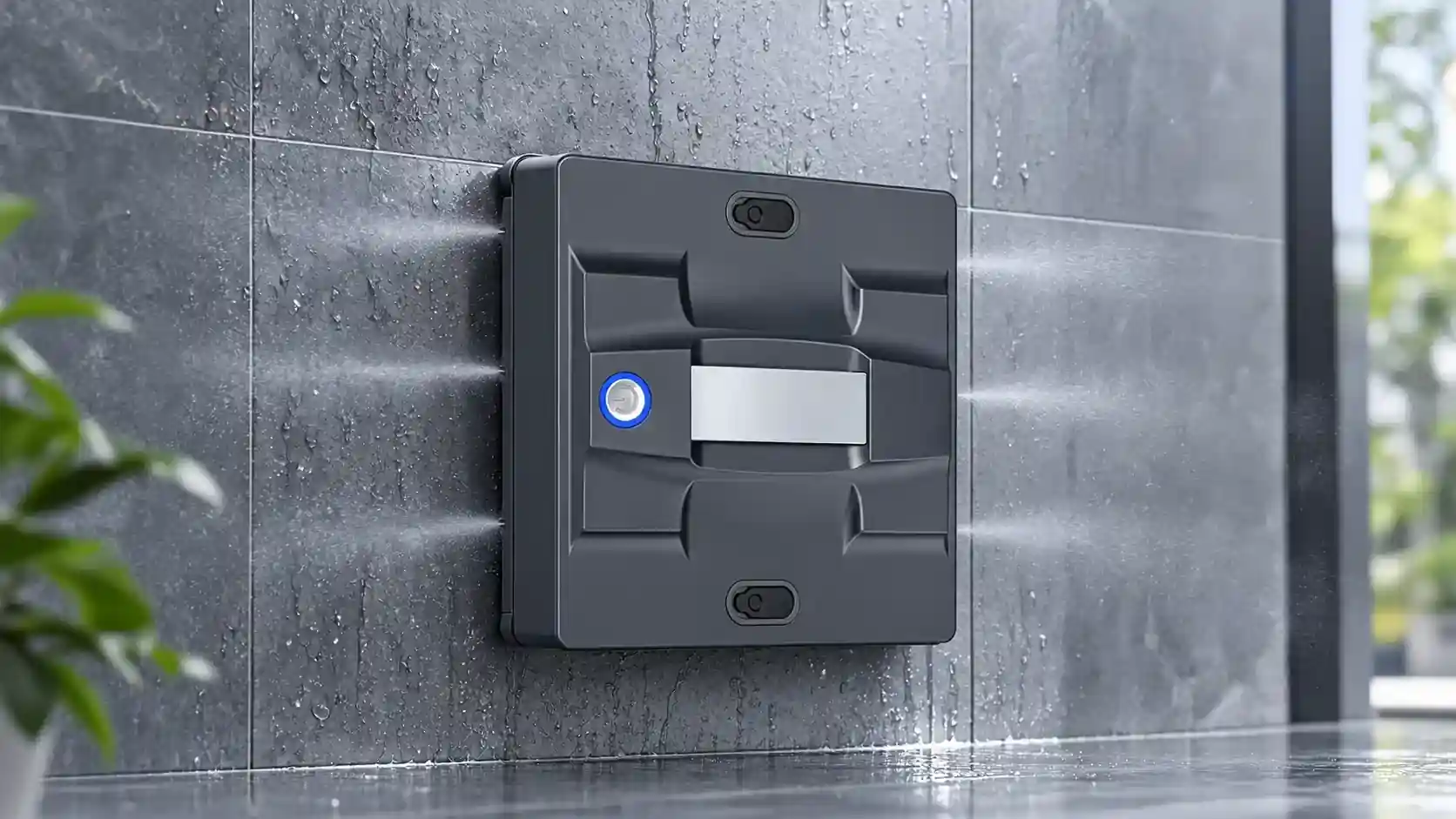
A buyer comparing window cleaning robots faces a narrower but trickier market than robot vacuums. The machines look similar — a square or round body that crawls across glass — but the things that decide whether a buyer keeps using one are safety, edge handling, and spray design, not headline suction. A robot that falls off a third-floor pane, or leaves a dirty border on every frameless balustrade, fails no matter how well it wipes the middle of the glass.
This guide compares five window cleaning robot manufacturers that distributors and wholesale buyers ask about most often: their product ranges, markets, and OEM capability. It is written for wholesale and OEM buyers, not as a lab test. The order below follows retail visibility and product breadth, not a quality score, and no manufacturer paid for placement. Specifications vary by model, so always confirm the exact model page before ordering. No specific prices are listed; only price tiers, because street prices change by market and channel.
For the full category picture, start with Window Cleaning Robots and the Window Cleaning Robot Manufacturer programme. You can also browse the full product range for the current lineup.
A note on specifications and prices
Window robot specifications change with every model year, and the same brand name can cover machines with very different spray systems, safety stacks, and control options. That is why this guide compares positioning and capabilities rather than printing a specification sheet for each manufacturer. Where a capability is mentioned — ultrasonic spray, frameless-glass support, a backup battery — it refers to the manufacturer’s current higher-tier models unless stated otherwise, not to every model in the range. Prices are given as tiers only, for the same reason: the same machine can sit in different tiers in different markets.
Scope note: this list covers single-unit vacuum-adhesion robots that crawl the glass. Handheld window vacuums and magnetic twin-unit cleaners are a different category and are not listed here.
How this list was chosen
Manufacturers were selected on three checks a buyer can verify: presence in major retail channels, breadth of the current lineup (from value models to dock- or station-based flagships where the brand has them), and recognition among end buyers. A manufacturer with one strong model but no range, or a range with no retail presence, did not make the list.
One rule matters for reading this list honestly. A consumer brand and a manufacturing partner are different things. The first four entries below are retail manufacturers sold to households. The fifth, Kingbot, is included as the OEM and wholesale counterpart: the option for buyers who want their own brand rather than distributing someone else’s. Kingbot is not presented as a manufacturer for any of the other brands on this list.
How window robots stay on the glass, explained
Everything about a window robot starts with adhesion. A vacuum motor pulls the body against the glass, and the cleaning pads wipe as the robot follows a planned path. If adhesion fails, nothing else matters — so the safety stack around it is the first specification to understand, not the last.
Four parts make up that stack. The safety rope is the physical backup: it is clipped to a fixed point indoors so that a fall becomes a dangle, not a drop. The backup battery, usually called UPS, holds suction for a short time if mains power cuts out, while the robot sounds an alarm so the owner can retrieve it. Edge detection — sensors, bumpers, or suction monitoring — tells the robot where the glass ends, which is what makes frameless glass possible at all. And the cleaning path itself (typically Z-shaped and N-shaped passes, plus spot cleaning) decides whether edges and corners get covered or left with a dirty border.
Framed and frameless glass are different tests. On framed glass, the robot can feel the frame and turn. On frameless glass — balustrades, shower screens, glass doors — there is no frame to feel, so the robot must detect the edge itself. Buyers serving homes with frameless glass should treat frameless support as a hard requirement, not a nice-to-have, and check it model by model rather than by brand name.
Corded and cordless models split the market in a second way. Corded models run as long as the owner needs and never run out of charge, but the owner routes a cable and a safety rope to every pane. Cordless models remove the cable and suit large or awkward glass, but cleaning time is limited by the battery, and the robot must return for charging between sessions. Neither is better in general; the right choice depends on home size and how many panes the buyer cleans in one session.
Spray design is the third split. Some robots spray water directly onto the glass ahead of the pads. Others use ultrasonic nozzles that turn water into a fine mist, which wets the cloth evenly and leaves less standing water behind. A few flagship lines add a wash station that cleans the pads themselves. The practical difference shows up in streaks: uneven dampness streaks, even wetting does not. When a distributor asks which spray system a market prefers, the honest answer is that mist systems suit streak-sensitive buyers, while direct spray suits value buyers who accept more manual pad care.
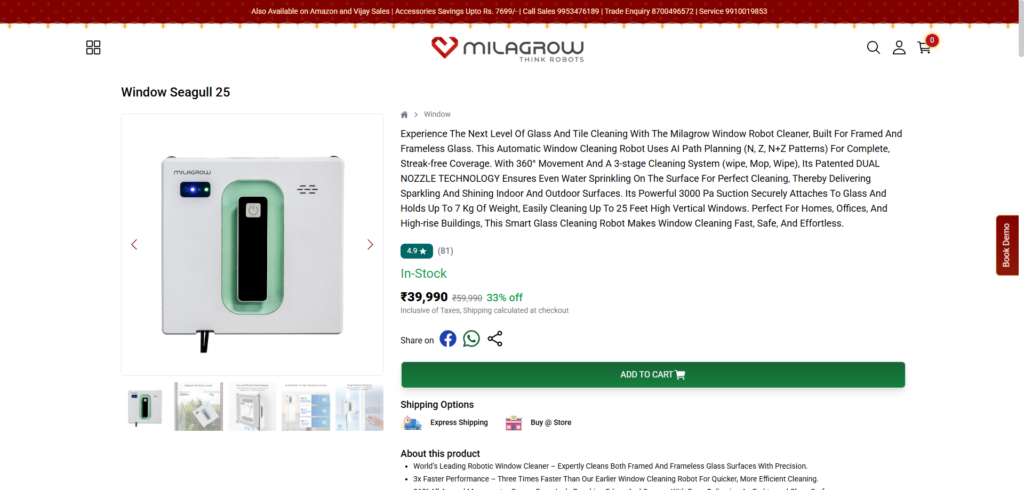
1. Hobot (HOBOT Technology)
Strengths. Hobot is the leading dedicated window-robot specialist, and the lineup shows it: a broad range of square models built only for glass, from long-selling value units to dual-spray flagships, sold across dozens of markets. Ultrasonic spray that turns water into a fine mist is the house signature, and the combination of app control, remote control, and a safety rope with backup power is consistent across the range. Few competitors can match the depth of its window-only catalogue.
Best for. Buyers who want a technology-led window story at mid-range to premium tiers, especially where frameless glass and streak-free results are the selling points.
Watch out for. The range is wide enough to confuse buyers: many similar square models sit close together, so the lineup needs careful tiering at retail. Premium models sit at premium tiers, and service coverage should be confirmed market by market.
Official website: Hobot official site
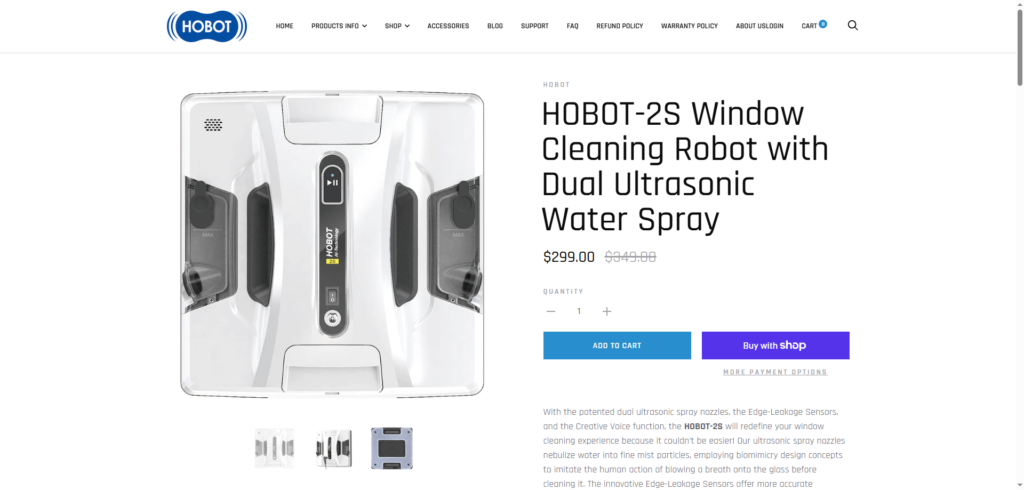
2. Cecotec (Conga WinDroid)
Strengths. Cecotec is a Spanish home-appliance brand whose Conga WinDroid line is one of the widest current window-robot ranges in Europe, from value models to double-spray flagships. The double spray system, app and remote control, multiple cleaning modes, and a safety rope with backup battery are consistent across the line, and the square design helps edges and corners. Retail presence across Spain and other European markets makes it an easy shelf to build for European buyers.
Best for. European mid-range buyers who want app-led cleaning with double spray, and distributors who need a European brand with local retail presence.
Watch out for. Model numbers proliferate across the range, so the exact model must be verified before listing — two similar model names can hide different features. Some retailer listings show out-of-stock, so availability should be confirmed per market before committing.
Official website: Cecotec official site
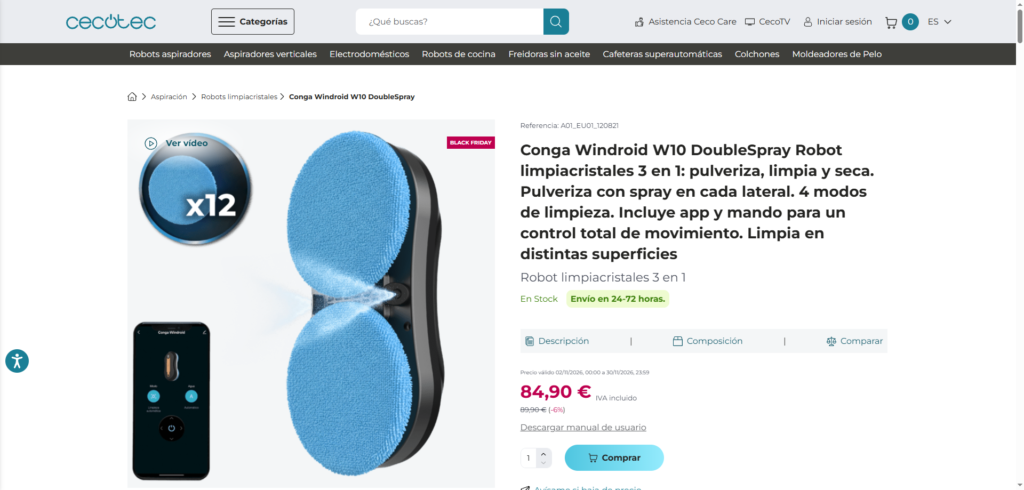
3. Milagrow (Window Seagull)
Strengths. Milagrow is an Indian home-robotics brand with a current window-robot line, from the WinBot to the Seagull 23 and Seagull 25. AI path planning across N, Z, and combined patterns, a patented dual-nozzle system for even water coverage, and support for both framed and frameless glass are the core strengths, with app and remote control, a safety tether with emergency battery, and a one-year warranty in its home market. For buyers serving India and South Asia, it is the most established local window-robot name.
Best for. Indian and South Asian markets, and buyers who want frameless support with app control at mid-range tiers.
Watch out for. The market focus is India-first, so service and parts outside India need confirmation before listing. Model names overlap across the range, so the exact model must be verified before ordering.
Official website: Milagrow official site
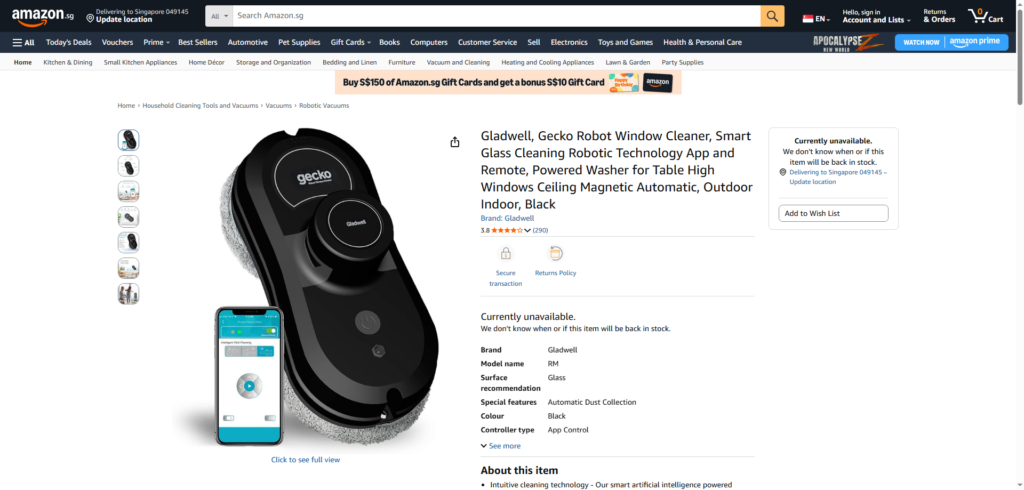
4. Gladwell (Gecko)
Strengths. Gladwell’s Gecko is one of the longest-selling entry-level window robots, and its appeal is simplicity: app and remote control, washable microfiber pads, edge detection, a safety rope, and anti-fall protection in a straightforward package. For buyers serving first-time robot buyers or gift and entry-level retail slots, ease of use matters more than flagship features, and Gecko delivers exactly that.
Best for. Value-tier buyers and entry-level retail slots where ease of use matters more than flagship features.
Watch out for. Gecko is a maintenance cleaner first: it handles fresh smudges and everyday dirt well, but set-in grime and heavy stains can exceed what its cleaning system is built for. The design is older than current spray-system flagships, so it should be tiered as an entry option, not a premium one.
Official website: Gladwell official site
5. Kingbot
Strengths. Kingbot is the manufacturing partner on this list rather than a retail shelf brand. Its window platform is a square robot with six spray nozzles and dual-side automatic spraying, built for framed and frameless glass, with a safety rope and backup power, app and remote control, and several exterior color options for private-label buyers. OEM, ODM, private label, and wholesale supply are the core offer, backed by factory quality control (Quality Control) and the Factory programme.
Best for. Distributors and brand owners who want their own label, their own packaging, and a single manufacturing partner across tiers, rather than distributing a retail brand.
Watch out for. Kingbot has no consumer retail recognition of its own, because its products reach households through partners’ brands. Buyers must plan for production lead time, and should confirm certifications and samples before committing.

Comparison at a glance
| Manufacturer | Approach | Cleaning focus | Price tier | Best fit |
|---|---|---|---|---|
| Hobot | Dedicated specialist, ultrasonic mist spray | Frameless glass, streak-free results | Mid-range to premium | Technology-led buyers |
| Cecotec (Conga WinDroid) | Spanish brand, double spray range | App-led cleaning, European retail | Value to mid-range | European buyers |
| Milagrow | Indian brand, dual-nozzle system | Frameless glass, app control | Mid-range | India and South Asia |
| Gladwell (Gecko) | Simple entry package | Everyday maintenance cleaning | Value | First-time buyers |
| Kingbot | OEM and wholesale tiers | Own-brand supply | Wholesale | Own-brand buyers |
How to choose
Match the manufacturer to the market, not to a global ranking. A premium mist-spray flagship suits a high-income market with large frameless glass; a slim value model suits a small-apartment market where the buyer cleans a few panes at a time. A cordless model suits homes with many windows or awkward glass; a corded model suits buyers who clean one room at a time and never want to think about charging.
Glass type decides more purchases than any other single factor. If the market has frameless balustrades, shower screens, or glass doors, frameless support is a hard filter — apply it before comparing anything else. If the market is mostly framed windows, the filter loosens, and spray design and service network matter more.
Service decides the second purchase, and the second purchase is where distributors make their money. A brand with a local service route and available pads and parts keeps buyers in the range; a brand that sells only through a marketplace store leaves the distributor holding the service problem. Check the service route before the first order, not after the first complaint, and ask how factory quality control is documented for your order.
Shortlist by buyer type
- Premium retail buyers: start with Hobot and Cecotec’s flagships, and compare their spray and safety systems side by side.
- Frameless-glass markets: start with Hobot and Milagrow, and verify frameless support model by model.
- Value and entry retail: start with Gladwell, and Cecotec’s lower tiers, and tier them as maintenance and entry options.
- Own-brand buyers: talk to Kingbot about the OEM and ODM programme instead of distributing a retail brand.
What distributors check before listing a brand
Six checks separate a brand that sells through from a brand that comes back as complaints.
First, the safety stack: safety rope, backup power, and edge detection, tested on the buyer’s own glass — including frameless glass if the market has it. Second, the spray system: mist or direct spray, and how evenly it wets the cloth, because streaks are the most common complaint after safety. Third, the service route: who handles warranty and parts in the buyer’s market, and how fast pads and accessories arrive. Fourth, certifications by market: the certificates the buyer’s market requires, confirmed for the exact model, not the brand in general. Fifth, the sample: one sample evaluated on real windows in the buyer’s market before any volume commitment (request a sample), checked against function, accessories, logo placement, packaging, and manual content. Sixth, the consumables: pads, spray nozzles, and cloths, and whether they stay available for the life of the listing.
A brand that passes all six is a listing. A brand that fails the first is a return waiting to happen.
Frequently asked questions
Do window cleaning robots work on frameless glass?
Some do and some do not. Frameless glass needs edge detection that works without a frame to feel, so the capability must be confirmed for the exact model. Do not assume a brand’s whole range supports frameless glass because one model does.
What happens if the power goes out while the robot is on the glass?
The backup battery holds suction for a short time while the robot sounds an alarm, and the safety rope holds the robot if suction fails. The owner should retrieve the robot promptly and never rely on suction alone — the rope is part of the system, not an accessory.
Corded or cordless — which should I list?
Corded models run as long as needed and suit buyers who clean a few panes at a time. Cordless models suit large homes and awkward glass where a cable gets in the way, but cleaning time is limited by the battery. Match the choice to home size and pane count, not to novelty.
Can a window robot clean tinted or coated glass?
Check the manufacturer’s guidance for coated and tinted films before listing, and test a small area first. Coatings vary, and a cleaner or pad that suits plain glass may not suit every film.
How do I verify a supplier before ordering?
Evaluate one sample on real windows in your market, confirm the certifications your market requires for the exact model, and confirm parts and service coverage before committing to volume. A supplier that cannot pass a sample evaluation should not receive a volume order.
Do buyers need to stay home while the robot cleans?
For the first runs, yes: the owner attaches the safety rope, starts the robot, and stays nearby until the robot’s behaviour on that glass is known. After that, the robot cleans a pane on its own, and the owner moves it to the next pane — robots do not move between windows by themselves.
Sourcing next step
If you are comparing manufacturers for distribution, or building your own window-robot brand, the next step is a sample evaluation on your own glass — not a catalogue comparison. Tell us your target market, product category, order quantity, and customization needs through the OEM and ODM programme, and we will come back with a tailored next step.
Start your own window cleaning robot brand
OEM / ODM Manufacturing Partner — Tell us your target market, product category, order quantity and customization needs.