
SG20 Entry-Level Robot Vacuum
Assess the SG20 robot vacuum for your distribution channels. Designed as an entry level robot vacuum, this model focuses on basic daily cleaning, simple operation, compact packaging and a cost structure that works for wholesale programs, promotional campaigns and e-commerce sellers.
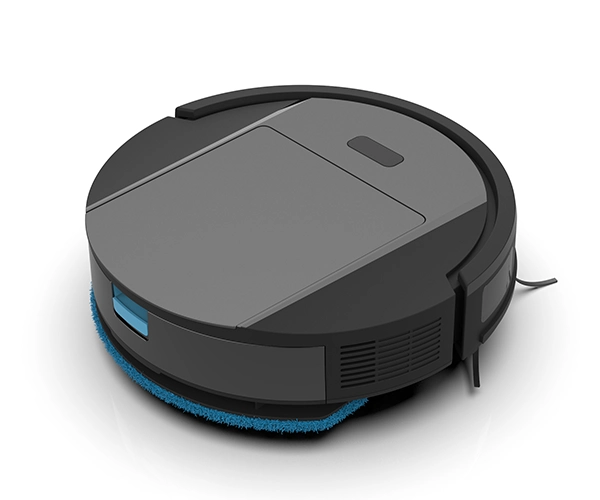
What Is the SG20?
The SG20 is an entry-level gyroscope robot vacuum built for wholesale and private-label channels. It combines 2500Pa suction with a tangle-free suction inlet (no main roller brush), up to 120 minutes of runtime, and a 2-in-1 300 ml dustbin + 250 ml water tank for daily sweeping, vacuuming and basic mopping on hard floors. At 285 × 285 × 76 mm it fits under low furniture. OEM options cover face-shell color, app branding, packaging and manual language, with a 500 pcs MOQ and FOB Shenzhen terms.

Core Commercial Highlights
These commercial notes explain where the SG20 robot vacuum fits best, which buyers should consider it, and which expectations should be confirmed before a sample or bulk order.
Entry-Level Positioning
Built for entry-level channels. By focusing on essential cleaning functions instead of costly advanced mapping, the SG20 keeps the model easier to quote, explain and reorder for volume buyers.
Suction Inlet Design
Uses a suction inlet robot vacuum structure instead of a main roller brush. This helps reduce hair tangling and makes routine maintenance easier for end users on hard floors.
Basic Vacuum & Mop Functions
Delivers reliable daily sweeping, vacuuming, and basic mopping capabilities. It meets the fundamental expectations of consumers looking for their first automated cleaning appliance.
Simple Operation
Designed for price-sensitive channels where user demographics prefer one-button start or simple remote control over complex smartphone app pairing processes.
Compact Packaging
The SG20 uses compact retail packaging. For entry-level programs, this helps buyers plan carton quantity, storage space and landed cost before confirming a container or mixed shipment.
Wholesale & Promotional Fit
A practical candidate for wholesale robot vacuum programs, supermarket retail events, corporate gifting, and loyalty program redemptions due to its high perceived value and low cost.

How the SG20’s Gyroscope Navigation Works
No laser, no camera — just a gyroscope that knows which way the robot is pointing. Here is what that means in practice.
Step 1 — Hold a heading
The gyroscope tracks the robot’s direction hundreds of times per second, so it drives in straight lines instead of wandering. Straight lines are what separate systematic cleaning from random bouncing.
Step 2 — Work in rows
Row by row, the SG20 covers the floor in a zig-zag pattern — Auto mode for whole rooms, Edge mode for walls and corners, Spot mode for a concentrated spiral on spills, all on a schedule you set.
Step 3 — Know the limits
Honest note: a gyroscope builds no floor map, so there is no room-specific cleaning or virtual walls. If your customers ask for those by name, step up to the SG30 or the SL40 LiDAR model.
Low battery, no drama: when the battery runs low, the SG20 returns to its charging dock to recharge. Buyers should keep a clear space around the dock — roughly an arm’s length on each side — so the robot can align and dock on the first try. Docking alignment is one of the checklist items for a reason: most “won’t charge” reports trace back to a blocked dock, not a faulty battery.
SG20 Full Specifications
Detailed technical parameters for B2B procurement evaluation. For specific customizations, please verify during inquiry.
| Model Name | SG20 Entry-Level Robot Vacuum |
| Navigation Type | Gyroscope; Zig-zag / Auto / Spot / Edge / scheduled cleaning |
| Cleaning Mode | Sweep, Vacuum, Basic Mop |
| Brush Structure | Suction Inlet (No main roller brush) + Dual Side Brushes |
| Suction | 2500Pa |
| Power | 42W |
| Noise | ≤67dB |
| Filter | HEPA H11 |
| Suitable Floors | Tile / wood floor / carpet |
| Battery Capacity | Li-ion 2600mAh / 14.4V |
| Working Time | Approx. 120 minutes |
| Charging Time | Approx. 4 hours |
| Dustbin / Water Tank | 2-in-1: 300 ml dust bin + 250 ml water tank |
| Product Size | 285 × 285 × 76 mm |
| Package Size | 38 × 31 × 11 cm |
| Master Carton | 4 pcs / carton; 44 × 35 × 43 cm; 15 / 17 kg |
| Loading Quantity | 1800 / 3600 / 4200 pcs (20′ / 40′ / 40HQ) |
| Accessories Included | Charging Dock, Power Adapter, Side Brushes, Filter, User Manual, Cleaning Tool |
| Available Plug Type | EU, US, UK, AU (Confirm required standard before production) |
SG20 Purchase Notes for First Orders
Before placing a first SG20 robot vacuum order, buyers should decide whether the model is being used as a low-price retail SKU, a promotional bundle, an online entry model, or a trial product for a new market. That decision affects packaging, accessory mix, sample checks and the way the product should be described to end users.
The SG20 is strongest when the sales promise stays realistic: basic daily floor cleaning, simple use, hard-floor dust pickup, easier maintenance with a suction inlet structure, and stable supply for repeat orders. It should not be positioned as a high-end mapping robot or a premium station model.
Confirm the sales role
Decide if SG20 will be your opening price point, seasonal promotion, e-commerce starter SKU, or distributor test model before asking for final packaging and quantity advice.
Check sample behavior
Review movement, suction, charging, wheel clearance, noise and appearance on the same floor types your customers will use most often.
Lock packaging early
Confirm color box, manual language, plug type, barcode, carton mark and accessory list before mass production to avoid delays during packing.
Plan the next order
If SG20 is part of a repeat wholesale robot vacuum program, keep approved specs and artwork stable so reorders can move faster.
If the sample fails a checklist item: do not approve the bulk order and hope it improves. Report the exact item — suction on a named floor type, docking alignment, a noise reading, a finish defect — and hold the order until the corrected sample passes. One delayed week at sample stage is cheaper than one container of mismatched goods.
Confirm every order in writing: model, quantity, plug type, manual language, artwork version, carton marks, and inspection standard. Verbal agreements drift; the written confirmation is what production builds to, and it is what inspection checks against.
Ideal Buyer & Channel Fit
The SG20 is not designed to compete with high-end smart vacuums. It has a clearer role: serving channels that need a simple, lower-price robot vacuum with stable supply. It is a practical SKU for:
Importers testing demand:
For markets newly introduced to automated cleaning, the SG20 provides a low-risk entry point.
Distributors building a low-price SKU:
Fills the base tier of a product portfolio, capturing price-sensitive demographics.
E-commerce sellers:
Requires a basic robot vacuum with low defect rates and simple operation to minimize returns.
Retailers & Promotional programs:
Perfect for high-volume promotions, Black Friday deals, or supermarket appliance aisles.
Buyers comparing options:
Those who need to balance budget against features, often comparing the SG20 with higher-spec robot vacuums to finalize their procurement strategy.
Cleaning Coverage & Use Case
To reduce mismatch and after-sales pressure, the SG20 should be positioned honestly in product listings and retail materials. It works best in specific environments:
The SG20 is optimized for apartments and small homes. Its navigation is best suited for less complex layouts. It is best suited for hard floors (tile, laminate, hardwood) for basic daily dust collection, pet hair, and small debris. Because it utilizes a suction inlet rather than a rolling brush, it can reduce hair tangling compared with a main roller brush structure. It fits channels where simple function, easier maintenance and stable pricing matter more than advanced mapping.
What “less complex layouts” means in practice: open-plan living rooms, bedrooms with clear floor space, and kitchens with straight runs of tile. The SG20 is at its best where it can run long straight rows. Narrow galley kitchens, rooms with dense chair legs, and floors covered in cables and toys slow any robot down — the SG20 included. For listings, name the ideal home (“apartments and small homes with hard floors”) instead of promising every home.


Suction Inlet, Not a Roller Brush — On Purpose
The SG20 pulls air straight through a wide inlet instead of spinning a brush bar. That single decision shapes the whole product:
- ✓ No hair wrap. Pet hair goes straight into the 300 ml dustbin instead of winding around a roller. Owners who dread the weekly de-tangling ritual notice this immediately.
- ✓ Less to maintain. No brush bar means no bearings to clog and no brush to replace — fewer spare parts for you to stock, fewer support tickets about them.
- ✓ Efficient airflow. 2500Pa through a straight, short air path loses less energy to brush friction — more of the rated suction reaches the floor.
The honest trade-off
On carpet, a roller brush agitates the pile and pulls out embedded dust a straight inlet cannot reach. That is physics, not marketing — and it is exactly why we also build the SG30 with a roller brush.
Rule of thumb for your listings: hard floors + pets → SG20 suction inlet; carpet + pets → SG30 roller brush. Same factory, same app, same 500 pcs MOQ — different cleaning head for different homes.
What the dual side brushes do: they sweep debris from edges and corners into the suction path, so the SG20 cleans along baseboards and around furniture legs rather than only in open floor. For hard-floor debris — fine dust, crumbs, pet hair, grit tracked in from outside — the combination of side brushes and a straight suction inlet covers the daily mess without a brush bar to maintain.
SG20 vs Other Kingbot Models
Compare the SG20 against our broader range to ensure you select the correct SKU for your target market and pricing strategy.
| Feature / Dimension | SG20 (Current) | SG30 Gyroscope | SL40 LiDAR / SW75 Station |
|---|---|---|---|
| Positioning | Entry-Level Robot Vacuum | Mid-Range Smart Vacuum | High-End Premium |
| Navigation | Gyroscope (Zig-zag) | Gyroscope (Path Planning) | Laser (LiDAR) / SLAM |
| Price Tier | Low (Highest Margin Potential) | Medium | High |
| Brush Type | Suction Inlet (No tangles) | Main Roller Brush | Main Roller / Anti-tangle |
| Target Channel | Promotions, Supermarkets, Basic E-commerce | Mainstream Retail, Amazon Brands | Premium Brands, Smart Home Integrators |
| Bulk Order Role | Volume driver, traffic builder | Core profitability SKU | Brand image, high ASP |
Explore our Slim Robot Vacuum series for alternative form factors

When to add the SL40 or SW75: when your buyers start asking for room-specific cleaning, virtual walls, or a self-cleaning station by name, the SG20 has done its job as the entry point. That is the moment to quote the SL40 for mapping or the SW75 for the full station experience — the SG20 opened the account, the upgrade grows it.
What the SG20 is not: it is not a mapping robot, not a station model, and not a deep-carpet cleaner. Saying so is not a weakness — it is what makes the SG20 credible. Buyers who hear an honest boundary on the entry model trust the same seller’s recommendation when it is time to quote the mid-range or premium model. The fastest way to lose a distributor is to sell them an entry robot as a flagship and let their customers discover the difference.
The Wholesale Math: 1,800 Units per 20ft Container
Entry-level products live or die on logistics. Here are the verified numbers behind the SG20’s freight economics.
A 500-unit trial order fills less than a third of a 20ft container — real market testing without container-level commitment. And the compact gift box keeps per-unit sea freight low, which is where entry-level margin is actually made. See how wholesale robot vacuum programs work across the lineup.
Building the landed-cost math: per-unit freight is only one piece. Add import duty for your market, port and warehouse handling, and last-mile delivery before you set the retail price. Confirm the duty rate for robot vacuums in your destination country before quoting retail partners — duty varies by market, and it moves the margin more than the freight does at this price tier.
OEM & Branding Options for SG20
For buyers who need light branding, Kingbot can support standard OEM options for bulk SG20 orders. You can customize: Product Logo, Color Options, Packaging Artwork, Manual Language.
If your procurement team needs a wider OEM project plan beyond basic SG20 branding, please review our full OEM robot vacuum manufacturing services, or our general OEM/ODM capabilities.
What OEM covers on the SG20: face-shell color and logo placement, app branding, color-box and carton artwork, and manual language. The cleaner the artwork files, the faster the approval cycle — send print-ready files and confirm the proof before production, not after. OEM orders run on the same 500 pcs MOQ as standard orders.
Packaging & Bulk Order Notes
Logistics efficiency matters for entry-level products. The SG20 is packaged to maximize container space and ensure safe transit.
1. Retail Ready
Individual color box designed for shelf display or direct-to-consumer e-commerce shipping.
2. Master Carton
Durable corrugated master cartons protecting multiple units during sea freight. Carton marks are customizable.
3. Compliance
Barcode/SKU label printing available. Ensure to confirm regional plug types (EU/US/UK) and language requirements before production begins.
4. Sample Approval
We recommend sample approval before bulk order confirmation, so both teams share the same product and packaging standard.
Carton marks: confirm SKU, quantity, plug type, and destination on the carton mark before production. A correct carton mark keeps customs clearance, warehouse receiving, and retail distribution moving without re-labeling at destination.
QC & Sample Review Checklist
When evaluating an SG20 sample or reviewing pre-shipment inspection photos, buyers should check the points below against their channel standard:
- Suction power test (hard floors)
- Charging & docking alignment
- Wheel movement & clearance
- Anti-drop sensor response
- Operating noise level
- Surface finish & appearance
- Accessory completeness
- Packaging integrity
Learn more about our cleaning appliance quality control process and the factory behind it.
Keep the golden sample as the reference. The approved sample is the standard every inspection is judged against — face-shell color, logo placement, manual language, plug type, accessory set, and carton marks. Pre-shipment photos should show the full accessory set laid out next to the unit, not just the boxed product, so nothing is assumed complete.
Robot Vacuum Aging Test

The Real Limits of Entry-Level Gyroscope Navigation
Your end customers will ask two questions: will it miss spots, and will it bump around? Give them straight answers and you will get fewer returns.
On missed spots: gyroscope navigation covers row by row, so it misses far fewer spots than random-bounce robots. But a gyroscope builds no floor map. In a simple apartment with a clear layout, that barely matters. In a large home, a multi-room layout, or rooms packed with furniture, the SG20 can still miss the odd corner — and there is no room-specific cleaning or virtual wall to fix it afterward. For those homes, the honest recommendation is a LiDAR model such as the SL40.
On bumping: the SG20 drives straight lines, not random wandering, and its bumper and anti-drop sensors handle everyday obstacles. It will still touch furniture legs — every robot without a map does — but it does so gently and systematically, not by bouncing from wall to wall.
For your listings: do not write “smart mapping” or “whole-home planning.” Write “systematic row-by-row cleaning.” Most return disputes for entry-level robots come from over-promising, not from the product itself.
Thresholds, doorways, and dark floors: the SG20 crosses normal door thresholds between rooms and keeps cleaning on the other side. Its anti-drop sensors watch for stairs and ledges. Very dark floors can confuse cliff sensors on some robots in this class, so if a customer reports the robot stopping on a black rug, that is the first thing to check — it is a sensor behavior, not a breakdown.
How to demo it in a showroom: run Auto mode on a marked rectangle of hard floor and let buyers watch the rows form. A two-minute live demo explains gyroscope navigation better than any spec sheet, and it sets the expectation that the robot cleans in lines, not by wandering.
Who Buys the SG20: Four Channels, Four Ways to Sell It
Importers testing a new market. A 500-unit order is under a third of a container — enough to learn whether a market wants robot vacuums, without container-level commitment. Test with the SG20, then decide whether to add a mid-range model.
Distributors building a low-price SKU. The SG20 anchors the bottom of a portfolio and catches price-sensitive buyers. It is a traffic builder: the margin is in volume and in the later upgrade to a mid-range SKU.
E-commerce sellers. Simple functions mean fewer customer-service questions and fewer returns. Lead with “unbox and go — the remote works without any app setup” to lower the barrier for first-time buyers.
Retail and promotion channels. Supermarket shelves, Black Friday deals, corporate gifts, loyalty redemptions — low unit cost, high perceived value, compact packaging built for bulk buying. For gift and promotion orders, lock the color box and manual language early.

How big should the first order be? Match it to the channel. A market test needs 500 units — the MOQ — and leaves room to learn before reordering. A confirmed retail placement or promotion can start at a full container, because the 1800-unit 20ft load keeps per-unit freight low. The expensive mistake is ordering a container before the channel is proven, or ordering 500 units for a promotion that needed 2000.
Reorders move faster. Once the artwork, plug type, and manual language are approved, repeat orders reuse the same files. Keep them stable and the second order ships on a shorter decision cycle than the first.

Suction-Inlet Maintenance & Spare-Parts Planning
No main roller brush means no hair wrap, no brush bearings to clog, and no brush bar to replace. End-user maintenance comes down to three jobs: empty the dustbin, clear tangled hair from the side brushes, and tap out or replace the filter.
What to stock as spares: side brushes and filters only. You do not need to stock roller brushes at all. Support tickets are naturally fewer than for roller-brush models, and your listing Q&A can say so directly.
Daily care, in one line for your manual: empty the dustbin after each use, drain and air-dry the water tank, tap the filter clean instead of washing it, and use the included cleaning tool on the side brushes.
One reminder: a suction inlet cannot pull embedded dust out of deep carpet the way a roller brush can. That is physics, not a defect — and it is the reason carpet-first buyers should be offered the SG30.
The three support questions you will actually get: (1) “It stopped on my black rug” — check the cliff sensors and move it to a lighter floor to confirm normal operation. (2) “It is not picking up like before” — empty the dustbin, tap the filter clean, and check the inlet for a blockage. (3) “It will not dock” — clear the space around the charging dock and wipe the charging contacts. Put these three answers in your listing Q&A and most tickets answer themselves.
What not to promise: do not tell end users the filter is washable or the water tank can stay full between uses. The filter is tapped clean, and the tank is drained and air-dried after each mopping session. Two lines in the manual prevent the two most common avoidable failures.
Tuya App + Remote + Scheduling: A Simple Path for End Users
The SG20 supports three ways to control it: the Tuya App, the remote control, and the auto-charging dock. The positioning stays the same — simple first. Most users can press a button on the remote and start cleaning. The app is there for people who want scheduled cleaning, not a requirement for using the robot.
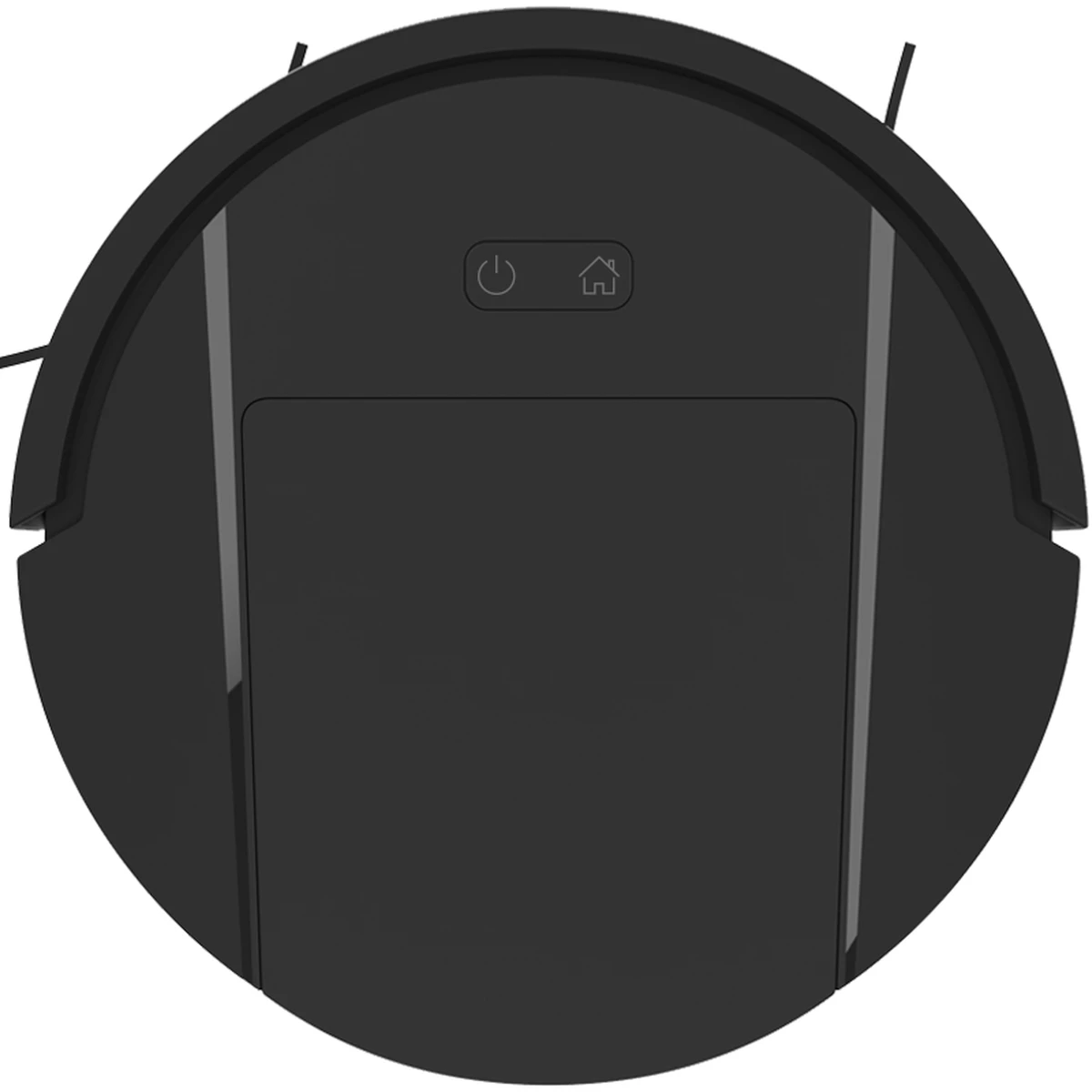
What the app adds:
scheduled cleaning times and cleaning-mode switching. Pairing follows the manual step by step. If pairing fails, the remote still runs the full cleaning cycle — nothing is blocked.
Advice for your customer service:
write “remote works out of the box” and “app for scheduling” as two separate lines in the manual. Do not let end users believe the robot cannot clean until it is paired — that is the single most common support misunderstanding for entry-level models. For buyers who want deeper app-level customization, our OEM/ODM program covers app branding.
If pairing fails: first confirm the phone is on the same network the manual specifies, then restart the robot and retry from the app’s add-device flow. If it still fails, the customer loses nothing — the remote runs Auto, Edge, Spot, and scheduled cleaning. Tell them that up front and a failed pairing stays a minor annoyance instead of a return.
App branding for private label: OEM orders can carry your brand in the app as well as on the shell and the box. Confirm the app branding scope when you confirm the artwork, so the app, the packaging, and the manual all ship with the same brand.
From Sample to Shelf: The SG20 Order Flow
Step 1 — Sample approval.
Run the sample through the QC checklist in this page: suction, docking, wheel clearance, anti-drop, noise, appearance, accessories, packaging. Test on the floor types your customers actually use, not only on a smooth showroom floor.
Step 2 — Lock the artwork.
Logo, color box, carton marks, manual language, barcode, and plug standard (EU / US / UK / AU) are all finalized before mass production. Mid-production artwork changes are the most common cause of delays.
Step 3 — Production and inspection.
Orders start at 500 units and move to production on the agreed schedule. Pre-shipment inspection follows the same standard as the approved sample, with packaging integrity and accessory completeness checked first.
Step 4 — Logistics.
At 500 units you are under a third of a 20ft container, so mixed shipments and consolidated sea freight are both practical. The 38×31×11cm gift box, 4-unit master carton, and 1800-unit 20ft load make landed-cost math straightforward.
Step 5 — Listing.
Write the listing copy and the customer-service Q&A while the sample is being approved — not after the goods reach port. See how our robot vacuum cleaner manufacturing and factory support that timeline.

Artwork files: send logo, color-box, carton-mark, and manual files in the formats the factory confirms at order time, and keep one approved master set. Every reorder, promotion rerun, and gift-box variant should start from that master set, not from a screenshot of the last shipment.
Pre-shipment evidence: review the pre-shipment inspection photos against the approved sample before the goods leave — appearance, accessories, packaging, and carton marks. Catching a wrong plug type or manual language at this stage costs days; catching it at port costs a season.
Timelines: confirm the production and shipping timeline at order confirmation, and confirm it again when artwork is locked. Artwork changes after lock are the usual reason a timeline moves, so treat the lock date as the real start of the clock.
SG20 vs Other Entry-Level Options: A Buyer’s Comparison
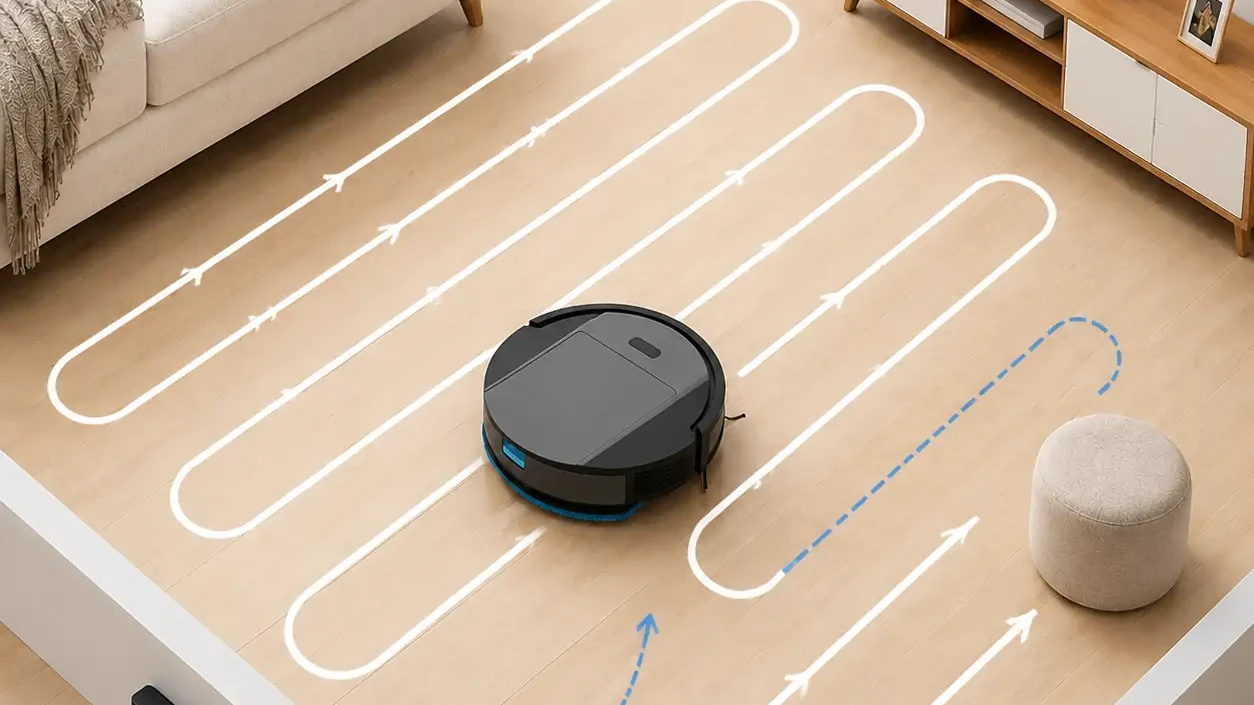
SG20 vs random-bounce entry models (such as the V27). At a similar entry price, the SG20’s gyroscope cleans row by row, so coverage is more systematic. Random-bounce models cost less and suit channels where buyers do not care about cleaning paths at all. Choose by how much your channel values systematic coverage.
SG20 vs SG30. Same gyroscope platform, different cleaning head — the SG20’s suction inlet (hard floors + pet hair, no tangling) versus the SG30’s roller brush (deep carpet dust). Hard floors first, pick the SG20; carpet first, pick the SG30. Same factory, same 500 pcs MOQ — the two SKUs sell well together.
SG20 vs SL40 / SW75. Not competitors, but price-band teamwork — the SG20 drives volume and traffic, the SL40 carries mainstream profit, the SW75 carries brand image. A distributor with all three price bands covered has a complete lineup.
One-line selector: first look at the floor in the customer’s home (hard floor or carpet), then the budget, then whether mapping functions are needed. When those three answers line up, the model picks itself.
SG20 vs V27 at a glance: the V27 is the lower-priced random-bounce entry model — 1000Pa suction, 90-minute runtime, 400 ml dustbin + 150 ml water tank, 290 × 290 × 78 mm. Against it, the SG20 trades a slightly smaller dustbin for gyroscope row-by-row navigation, 2500Pa suction, and a 120-minute runtime. If the channel’s buyers compare on price alone, the V27 wins the shelf tag. If they compare on cleaning behavior — straight lines, fewer missed spots, stronger suction — the SG20 wins the review.
Frequently Asked Questions
What type of buyer is SG20 suitable for?
Is SG20 an entry level robot vacuum?
Does SG20 use a suction inlet design?
Can SG20 be ordered for wholesale robot vacuum programs?
Can Kingbot support OEM packaging for SG20?
Can I request an SG20 sample before bulk order?
What should buyers confirm before placing an SG20 order?
Will the SG20 miss spots? How is gyroscope navigation different from random bounce?
Can the SG20 be used on carpet?
Does the SG20 support a mobile app, or remote control only?
Can the SG20’s mopping replace a mop?
What spare parts does the SG20 need?
What should I test when the sample arrives?
Is the SG20 suitable for promotion, gift, or supermarket channels?
How do I choose between the SG20 and the SG30?
Ask Kingbot About SG20 Samples and MOQ
Tell us your target market, channel, and quantity range. We reply with sample and MOQ guidance for your configuration.
Or reach out directly via our Contact Page.
Email: helen@king-bots.com | Phone: +86 18680681063