
A buyer comparing robotic vacuum brands faces the same problem in every market: the shelves look similar, but the products behind them are not. Navigation systems, mop systems, docking stations, and after-sales support differ widely, and the right choice depends on the price tier and the buyer you serve.
This guide compares ten robotic vacuum brands that distributors and wholesale buyers ask about most often: their navigation technology, cleaning focus, price tier, and market positioning. It is written for wholesale and OEM buyers, not as a lab test. The order below follows retail visibility and product breadth, not a quality score, and no brand paid for placement. Specifications vary by model, so always confirm the exact model page before ordering. No specific prices are listed; only price tiers, because street prices change by market and channel.
For the full category picture, start with Robot Vacuum Cleaners and the Kingbot product range.
A note on specifications and prices
Robot vacuum specifications change with every model year, and the same brand name can cover machines with very different motors, batteries, and docks. That is why this guide compares positioning and capabilities rather than printing a specification sheet for each brand. Where a capability is mentioned — LiDAR navigation, mop washing, self-emptying — it refers to the brand’s current higher-tier models unless stated otherwise, not to every model in the range. Prices are given as tiers only, for the same reason: the same machine can sit in different tiers in different markets.
How this list was chosen
Brands were selected on three checks a buyer can verify: presence in major retail channels, breadth of the current lineup (from entry models to dock-based flagships), and recognition among end buyers. A brand with one strong model but no range, or a range with no retail presence, did not make the list.
One rule matters for reading this list honestly. A consumer brand and a manufacturing partner are different things. The first nine entries below are retail brands sold to households. The tenth, Kingbot, is included as the OEM and wholesale counterpart: the option for buyers who want their own brand rather than distributing someone else’s. Kingbot is not presented as a manufacturer for any of the other brands on this list.
Navigation systems, explained
Navigation is the first specification to understand, because it decides how thoroughly a robot covers a home and how often it gets stuck. Four approaches dominate the market.
LiDAR navigation uses a spinning laser to build a precise floor map before cleaning starts. It works in dark rooms, follows methodical rows, and supports room-by-room control and virtual boundaries. It is the standard on most mid-range and premium models, and the safest default for larger homes.
Camera-based navigation, often called vSLAM, builds its map from images. Its advantage is object recognition: higher models can identify cables, shoes, and pet waste and steer around them. Its weakness is light — performance drops in dark rooms — and buyers who care about privacy should check whether images are processed on the device or in the cloud.
Gyroscope navigation uses internal sensors to track movement and clean in approximate rows. It costs far less than LiDAR, which is why it dominates value models. Coverage is good in simple, uncluttered layouts, but it misses spots more often in complex homes and cannot hold a precise multi-room map.
Hybrid systems combine two or more of these, typically LiDAR for mapping plus a camera for obstacle avoidance. They cost the most but cover the most situations.
For a distributor, the practical test is the home, not the sensor: small apartments suit gyroscope value models; large or cluttered homes justify LiDAR or hybrid flagships; pet households benefit most from camera-based obstacle avoidance.
1. iRobot (Roomba)
Strengths. iRobot created the category, and that history still shows in the product. Dual rubber brushes handle hair with less tangling than bristle brushes, obstacle avoidance on the higher models is well proven, and the self-empty Clean Base is a mature, widely supported system. Retail coverage and parts availability are among the best in the industry.
Best for. Buyers serving North America and Western Europe who need a safe, well-known premium or mid-range line with strong after-sales support.
Watch out for. Premium pricing, and mop performance has historically trailed vacuum-first rivals on comparable models. Buyers should compare mop models directly rather than assuming the vacuum reputation carries over.
Official website: iRobot official site
2. Roborock
Strengths. Roborock built its name on LiDAR navigation and methodical cleaning paths, then extended into mop washing and auto-empty docks on its flagship models. The range now covers value models through flagships, and the app’s mapping, room control, and scheduling are consistently strong.
Best for. Buyers who want a technology-led story at mid-range to premium tiers, especially where LiDAR navigation and mop washing are the selling points.
Watch out for. Flagship docks add cost and floor space, which narrows the buyer pool. Entry models differ sharply from flagships, so the lineup needs careful tiering at retail.
Official website: Roborock official site
3. Ecovacs (Deebot)
Strengths. Ecovacs offers one of the broadest lineups, from affordable models to stations that empty, wash, and dry. Voice control and a wide price ladder make it easy to build a full shelf from a single brand.
Best for. Distributors who want one brand covering several price tiers, particularly in markets where mid-range value decides the sale.
Watch out for. A wide range can confuse buyers when similar models sit close together. Software experience also varies by model, so check the exact model rather than the brand name.
Official website: Ecovacs official site
4. Shark
Strengths. Shark’s strength is retail execution: strong shelf presence, self-empty bases, and competitive mid-range pricing. Its bagless base design appeals to buyers who want lower running costs.
Best for. Buyers focused on mass retail in North America and the UK who need a recognisable name at a mid-range price.
Watch out for. Navigation and mapping on some models trail the LiDAR leaders, and mop features vary more across the range than the vacuum features do.
Official website: Shark official site
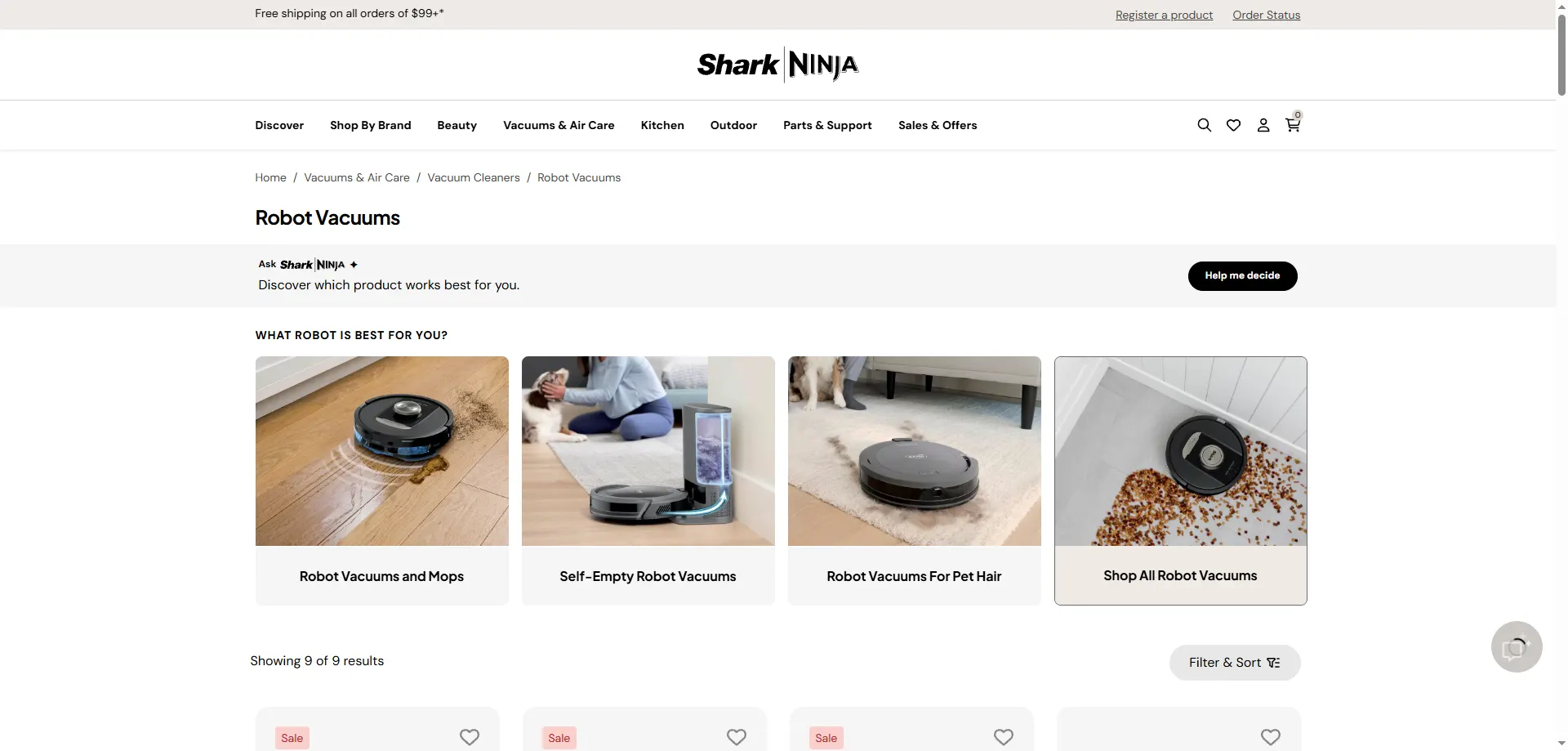
5. Dreame
Strengths. Dreame competes on cleaning performance per dollar: strong suction positioning, mop lifting and washing docks on higher models, and fast product updates. It has grown quickly from a value challenger into a full-range brand.
Best for. Buyers targeting performance-focused customers who compare specifications closely and accept a newer brand name.
Watch out for. After-sales networks are thinner than legacy brands in some regions, so service coverage should be confirmed market by market.
Official website: Dreame official site
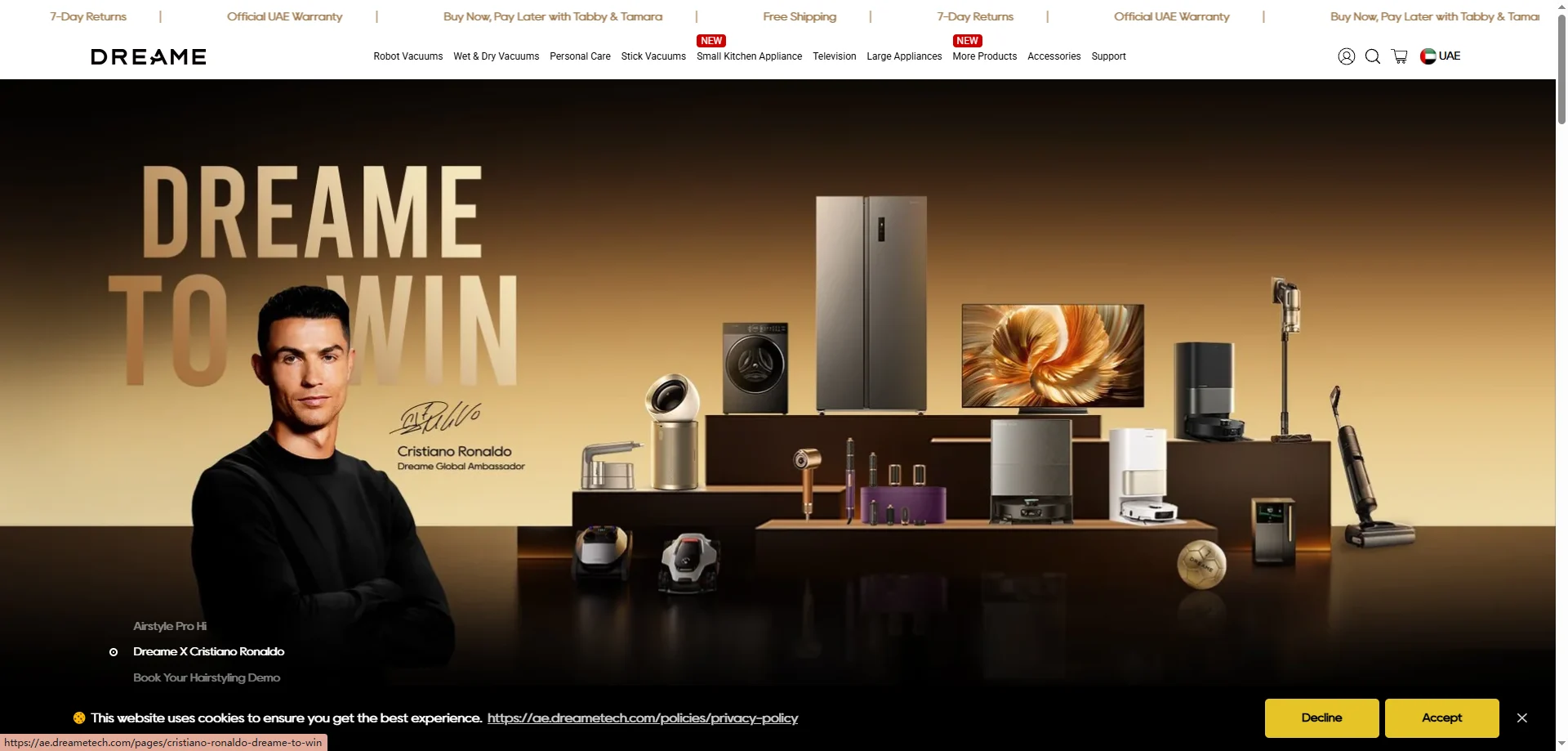
6. Narwal
Strengths. Narwal is mop-first: dual spinning mops with automatic washing and drying, quiet operation, and a design that suits hard-floor homes. For buyers whose customers mop as much as they vacuum, this focus is a real differentiator.
Best for. Hard-floor markets and buyers who sell on mopping results rather than vacuum specifications alone.
Watch out for. Vacuum-first buyers may find dust handling less central to the design, and dock-based models sit at premium tiers.
Official website: Narwal official site
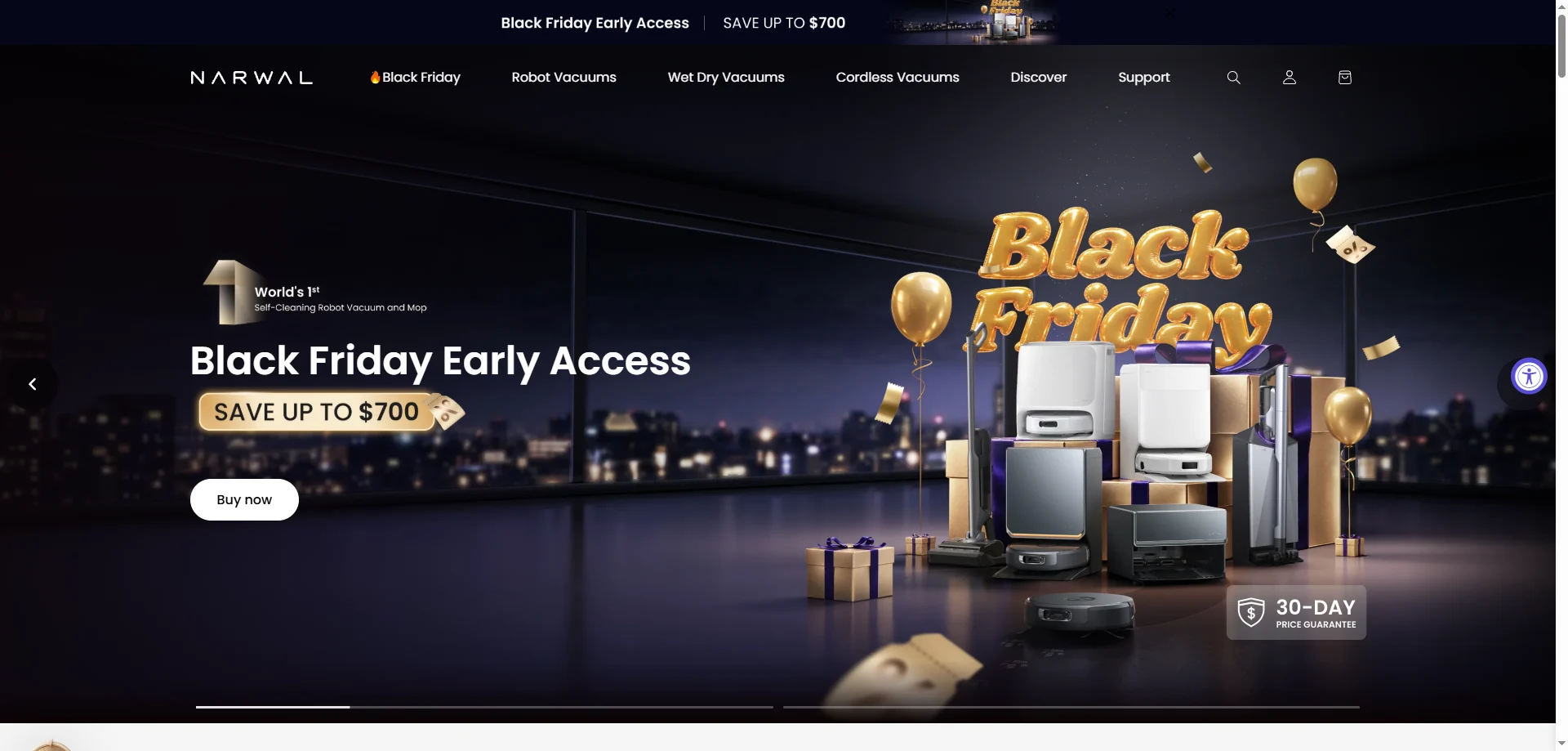
7. Eufy (Anker)
Strengths. Eufy wins on simplicity and value: quiet operation, slim designs, and straightforward apps. It is an easy recommendation for first-time robot vacuum buyers.
Best for. Value-tier buyers and gift or entry-level retail slots where ease of use matters more than flagship features.
Watch out for. Flagship dock options are fewer, and mapping on entry models is less advanced than on LiDAR-led rivals.
Official website: Eufy official site
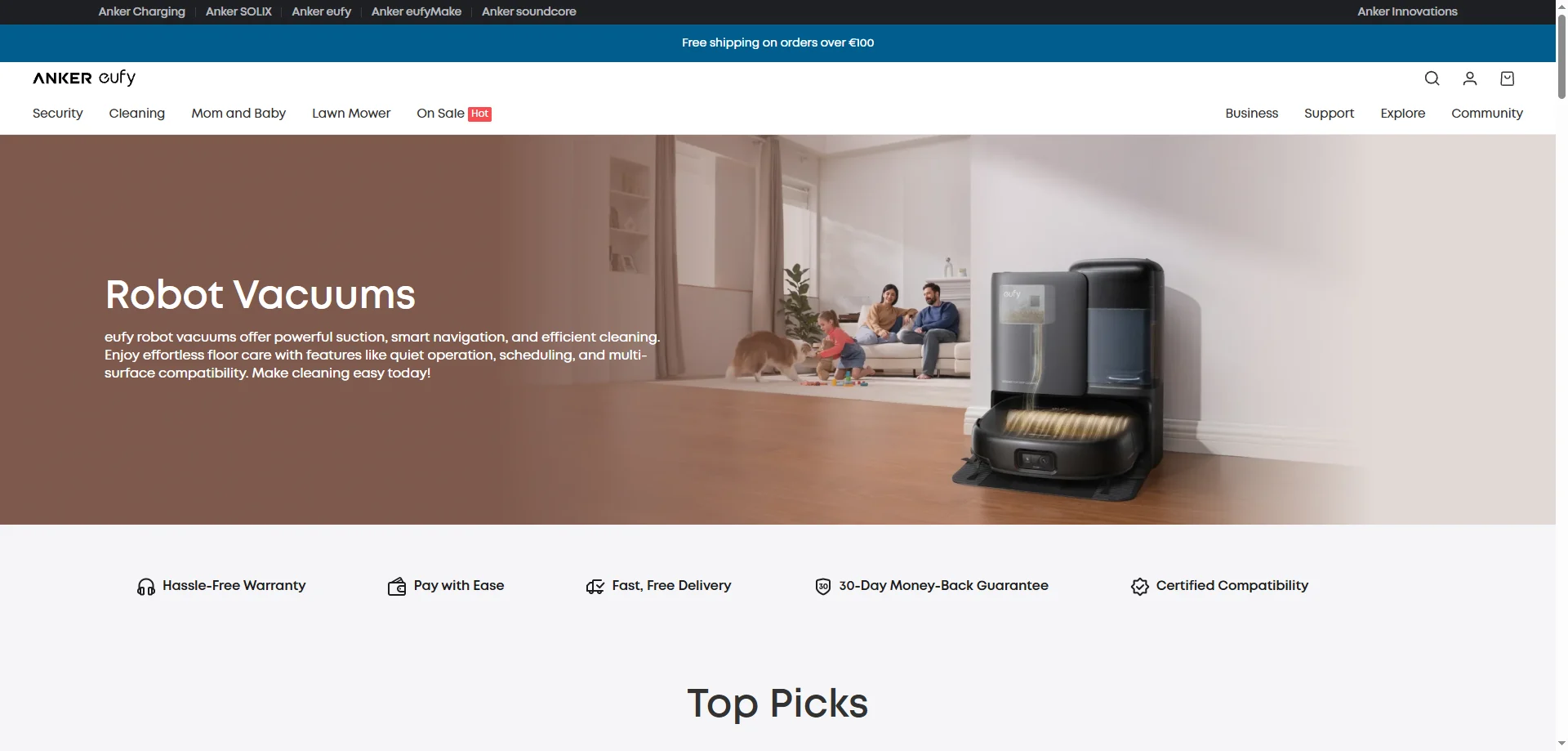
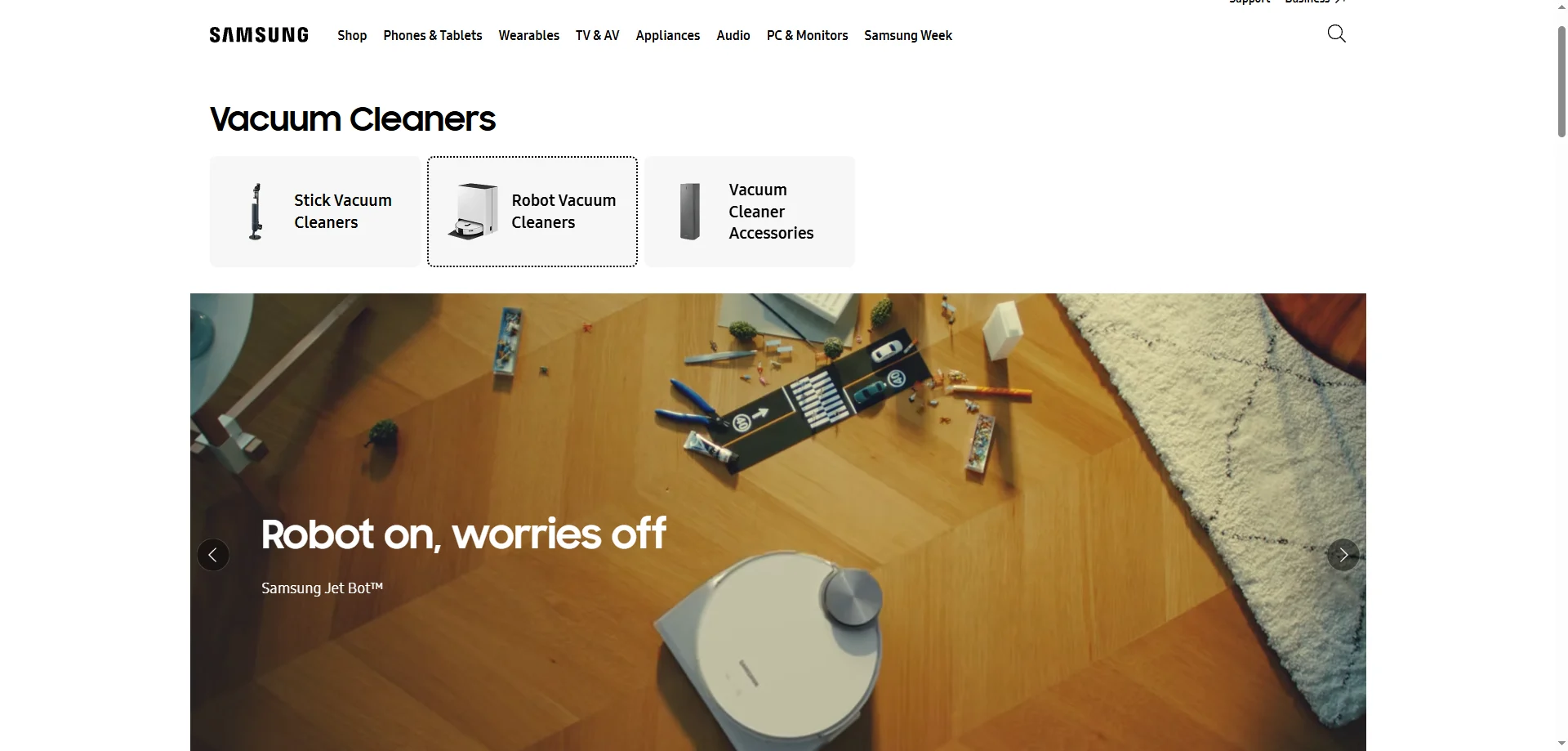
8. Samsung (Jet Bot)
Strengths. Samsung pairs LiDAR and camera-based navigation with object recognition and a deep smart-home ecosystem. For households already using Samsung products, integration is a genuine selling point.
Best for. Premium buyers in Samsung-strong markets who value ecosystem integration and object avoidance.
Watch out for. Premium pricing and a narrower range than the volume brands. The ecosystem advantage fades for buyers outside Samsung households.
Official website: Samsung official site
9. Xiaomi (Mi Robot)
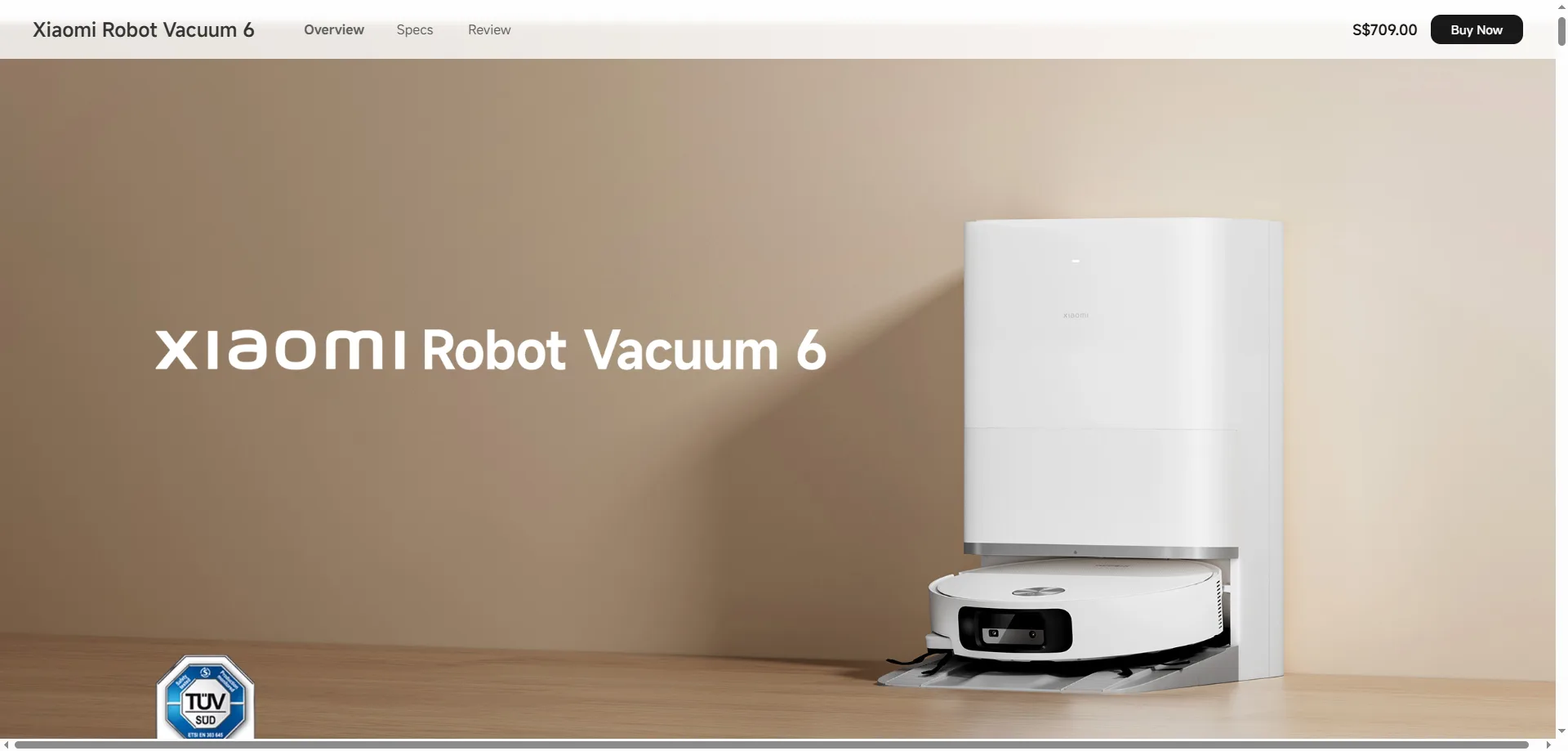
Strengths. Xiaomi offers LiDAR navigation and solid app control at value prices, with strong presence across Asia and Europe. For price-sensitive markets, the specification-per-dollar ratio is hard to beat.
Best for. Value and mid-range buyers in Asia and Europe where Xiaomi’s retail and app ecosystem are already established.
Watch out for. Model names vary by region, which complicates cross-market comparisons, and after-sales coverage varies by market. Mop washing is mostly reserved for higher tiers.
Official website: Xiaomi official site
10. Kingbot
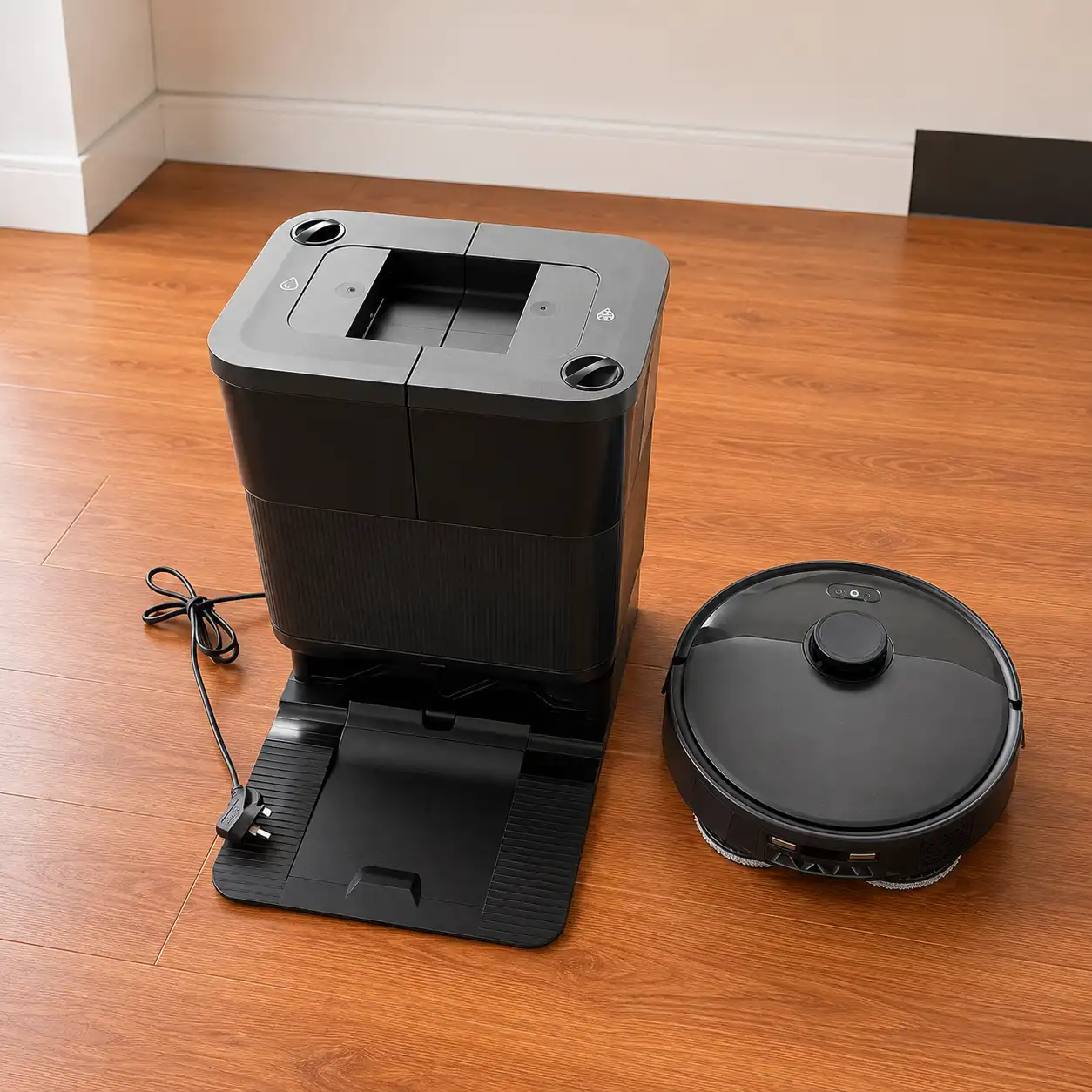
Strengths. Kingbot is the manufacturing partner on this list rather than a retail shelf brand. Its platforms cover the main wholesale tiers: an all-in-one robot vacuum and mop with a base station (SW75), a LiDAR model (SDL40), and value lines (SG30 and SG20). OEM, ODM, private label, and wholesale supply are the core offer, backed by factory quality control (Quality Control) and the Factory programme.
Best for. Distributors and brand owners who want their own label, their own packaging, and a single manufacturing partner across tiers, rather than distributing a retail brand.
Watch out for. Kingbot has no consumer retail recognition of its own, because its products reach households through partners’ brands. Buyers must plan for a 500-unit-per-model minimum order and for production lead time, and should confirm certifications and samples before committing.
Comparison at a glance
| Brand | Navigation approach | Cleaning focus | Price tier | Best fit |
|---|---|---|---|---|
| iRobot | Camera and sensor-based, obstacle avoidance on higher models | Vacuum-first, hair handling | Premium to mid-range | Safe premium retail |
| Roborock | LiDAR-led | Vacuum and mop washing docks | Mid-range to premium | Technology-led buyers |
| Ecovacs | LiDAR and camera across tiers | Broad range, wash and dry stations | Value to premium | Full-shelf coverage |
| Shark | Sensor and mapping models vary by tier | Vacuum with self-empty bases | Mid-range | Mass retail |
| Dreame | LiDAR-led | Suction performance, mop lifting and washing | Mid-range to premium | Specification buyers |
| Narwal | LiDAR-led | Mop-first, wash and dry | Premium | Hard-floor homes |
| Eufy | Sensor and mapping on higher models | Simple, quiet value cleaning | Value | First-time buyers |
| Samsung | LiDAR plus camera, object recognition | Ecosystem-integrated cleaning | Premium | Samsung households |
| Xiaomi | LiDAR on most models | Value vacuum and mop | Value to mid-range | Price-sensitive markets |
| Kingbot | LiDAR and gyroscope platforms | OEM and wholesale tiers | Wholesale | Own-brand buyers |
Dock systems compared
The dock is where much of the price difference now sits. Five levels are on the market.
A charging dock only recharges the robot. It is the cheapest and smallest option, and the buyer empties the dustbin by hand after every run. It suits value tiers and small homes.
A self-empty dock transfers dust into a bag or a bagless bin in the base, cutting emptying to weeks at a time. Bag systems cost more in consumables; bagless systems cost less to run but need the base bin cleaned.
A wash dock adds mop washing: the base rinses the mop pads after cleaning, so the buyer is not washing pads by hand. A wash-and-dry dock adds hot-air drying, which prevents damp smells between runs.
The fullest stations add automatic water refill and, on some models, drainage plumbing, so the buyer rarely touches water tanks at all.
Each step up adds floor space, purchase cost, and parts the buyer must eventually replace. Premium buyers accept that trade; value buyers usually do not. When comparing two brands, compare the dock as carefully as the robot: the dock decides the daily experience more than the motor does.
How to choose
Match the brand to the market, not to a global ranking. A premium dock-based flagship suits a high-income market with large hard floors; a slim value model suits apartments and first-time buyers. Three checks decide most deals: navigation type against the homes being served, dock cost and size against the buyer’s budget, and after-sales coverage in the target market.
Buyers who want their own brand face a different choice. Retail brands are not available for private labelling, so the route is a manufacturing partner. Compare platforms, request samples, confirm certifications, and agree on packaging and quality inspection before placing a production order. Kingbot’s OEM and ODM services and wholesale programme are built for that route, with robot vacuum wholesale and buyer solutions covering distribution models. The manufacturing overview sits on the Robot Vacuum Cleaner Manufacturer page.
Shortlist by buyer type
Mass-market retailers usually shortlist one value line and one mid-range line, because shelf space is limited and brand recognition moves volume. Premium specialty stores shortlist dock-based flagships, where demonstration sells the dock as much as the robot. E-commerce sellers shortlist specification-led brands, because comparison pages and reviews drive their traffic. Own-brand buyers skip the retail shortlist entirely and compare manufacturing platforms instead. In each case, shortlist two options per tier at most; a longer shortlist slows the decision without improving it.
Buying by market
The same brand can succeed in one market and struggle in another. In North America, retail brand recognition and service networks decide most listings, and buyers check FCC compliance and local parts supply first. In Europe, CE and RoHS compliance, repairability, and energy expectations carry more weight, and value tiers move faster than flagships. In Asia-Pacific, app ecosystems and value pricing dominate, and model names often differ from Western markets, so confirm the exact regional model. In the Middle East and Africa, dust handling and service coverage matter more than dock features, because support networks are thinner. Whatever the market, confirm voltage, plug type, language support, and warranty handling before committing to a range.
What distributors check before listing a brand
A brand that sells well in one market can still fail a distributor’s checks in another. Before committing to a range, experienced distributors verify six things.
First, samples: order the exact regional model, not a review unit, and run it on the floors your customers actually have. Second, certifications: confirm CE, RoHS, and FCC coverage for the target market, and check that the certification documents match the model being ordered. Third, warranty and spare parts: who handles repairs, how long parts are stocked, and what the buyer pays for consumables. Fourth, app and language support: the app, voice prompts, and packaging must cover the market’s languages, or returns follow. Fifth, pricing discipline: whether the brand protects distributor margins with a minimum advertised price policy or lets online discounting undercut the channel. Sixth, service coverage: whether a local service partner exists, or whether every fault becomes an international shipment.
A brand that passes all six is a safer listing than a brand that wins on specifications alone. This checklist is also the right way to evaluate a manufacturing partner: request the sample, the certification documents, and the inspection process before discussing volume.
Sourcing next step
If you are comparing brands for distribution, shortlist two or three tiers first, then confirm models, samples, and service coverage market by market. If you are building your own brand, start from the platform that matches your price tier and request a sample before discussing production. Either way, the next step is a conversation, not a catalogue order: contact Kingbot with your target market, product category, order quantity, and customisation needs.
Frequently asked questions
Which robotic vacuum brand is best overall?
There is no single winner. The best brand depends on price tier, floor type, and market. Use the comparison table above against your buyers, not against a global score.
Is LiDAR better than camera or gyroscope navigation?
LiDAR is generally the most methodical for mapping and dark rooms. Camera systems add object recognition but depend on light. Gyroscope navigation suits value models in simpler layouts. Match the system to the home, not to the specification sheet.
Are self-empty and mop washing docks worth it?
For premium buyers, yes: they cut manual work sharply. They also add cost, size, and maintenance. For value buyers, a simpler dock usually sells better.
Can I private-label one of the retail brands on this list?
No. Retail brands are sold under their own names and are not available for white labelling. For your own brand, work with an OEM manufacturer instead.
What order quantity should a distributor plan for?
For retail brands, quantities run through distribution channels. For Kingbot OEM production, plan for 500 units per model, and confirm samples and lead time before committing.
How do I verify a supplier before ordering?
Request a sample, confirm certifications and inspection reports, and agree on pre-shipment inspection. Kingbot’s quality control process is described on the Quality Control page.
Start your own robot vacuum brand
OEM / ODM Manufacturing Partner — Tell us your target market, product category, order quantity and customization needs.